

Facebook, Family, Fatherhood, Friendship, Parenting, Social Media

The caricature trap of Facebook

imagesThe caricature trap of Facebook – as in a greatly exaggerated version of real life, that often imparts the wrong take-aways.

Facebook is an awesome tool for connecting and I am a fan.  However, I have lately been confronted by two dynamics that are just wrong.  They are wrong for adults and they are wrong for my oldest daughter who just turned thirteen and recently set up a Facebook account.

Don’t compare your real life to someone else’s Facebook life.  Looking at my page or my wife’s page one might assume our life is all sun, beaches and margaritas.  We receive comments from people all the time about “living in paradise every day.”  In reality, we live minutes away from pretty bad poverty, we struggle with language barriers daily, we struggle through homework with four kids every evening and we usually go to bed exhausted.  There are ups and downs like everyone else.

Facebook only shows a few snapshots of an otherwise long movie and most of us (myself included) tend to show nice pictures from nice experiences.  In a similar fashion ESPN highlights show perhaps 5 plays out of ~130 from a typical football game.  They don’t show the plays that produced no tangible results yet took the same effort and energy.

I love this quote from Jim Collins – “Comparison is the cardinal sin of modern life.  It traps us in a game we can’t win.  Once we define ourselves in terms of others, we lose the freedom to shape our own lives.”  How much more is this true when we are comparing apples (our real life) to oranges (someone else’s Facebook life)?  And with 10% of Facebook accounts believed to be fake, the comparisons can be even more outrageous.

Don’t seek worth or approval from “comments” and/or “likes”.  A day after my daughter put up pictures on her new Facebook account she was a bit miffed that neither my wife nor I had “liked” her pictures.  She actually felt unappreciated because we had not “liked” her pictures.  I suspect this one instance is a microcosm of what happens with lots of people – I.e., feeling upset, disrespected or unappreciated because of not receiving “likes” or “comments” after posting a message or picture.

“Unexpressed gratitude expresses ingratitude” (from Andy Stanley) exists in real life.  If my wife continually goes out of her way to do something nice for our family (she always does) and no one ever takes the time to recognize it, her likely inference would be that no one really cares. Somehow this dynamic gets incorrectly applied in the online world where the lack of a “comment” or “like” is viewed as a personal affront.   This situation reminds me of a funny line (“people like-button me, they really like-button me!”) in a very funny song some friends wrote and performed – So Many Friends (That I Broke Facebook.)

My counsel to my thirteen year old (and to myself at times) is to not be so fragile in spirit or desperate for an approval that really doesn’t matter or have any bearing on your self-worth.

At the end of the day, Facebook (or any other social media platform) can be a great tool.  Beyond simply staying connected, it highlights the above lessons (and many others) and can lead to some great parent-child conversations in your household.  What lessons have you gleaned from Facebook and how have you applied them in your life?

[By the way, some “nice” new pictures are in the picture gallery]

Faith, Family, Fatherhood, God, Parenting

Don’t make me come down there! (and other lessons God might be teaching us through parenting)

Me and my little girls

Me and my little girls

The statement “there is no better or harsher corrective to one’s thinking about human transformation and development than one’s children” is so true at times.  As we wind our way through parenting our children, it is easy to envision God looking down at us, the parents, and shaking his head at the irony of how often we miss the lessons we attempt to teach.  I assumed I might find a book or a series of articles on this topic, but could not, so I thought I’d share a few I’ve collected over time.  Where I can recall a direct source for the metaphor it is attributed.

If you believe in God you might identify with some of this content.  Even if you are unresolved spiritually or don’t believe in God, but are a parent you might identify with some of this content.  For me personally, many of the below examples hit closer to home than I would like.

Situation: You are driving in the car and your children are arguing in the backseat about something that is completely trivial.  You respond with something along the lines of “Don’t make me stop this car and come back there.”  Lesson: How often must God look down at us arguing over denomination issues, biblical interpretation issues, inter-family issues, etc. – where we are certain it is more critical to be right than to simply show love to each other – and think, “Don’t make me come down there.”  Metaphor from a Craig Groeschel message.

Situation: Two of your young children are fighting over who gets to cuddle with you (or run an errand, do something fun, etc.).  Before you want to do the fun thing with either of them you want them to reconcile with each other, and if they are not willing, you don’t really want to give either of them any special time.  Lesson: How often do we go to God with prayer, concerns, questions, etc. when we have unresolved conflict in our life?  How often must God look upon us and think first apologize to those you have wronged and then come to me?  Metaphor from a Craig Groeschel message.

Situation: You have bought your child something to eat – candy, popcorn, whatever.  You innocently reach over to grab a bite or a handful and your gesture is met with groans or screams.  Your first instinct is to say “I gave it to you and you can’t share just a little?”  Lesson:  My first instinct is way too often that what is mine is really mine.  It is easy to envision God shaking his head thinking “I gave it to you and you can’t share just a little bit???”  Metaphor from a Kevin Myers message.

Situation:  Think back on the birth of your first child.  Remember looking down at that little girl you just saw for the first time and thinking you would lay down your life for her, that you loved her more than you could describe, etc.  And the truth is that she had done nothing to be deserving of your love and affection.  Lesson: It is easy to forget that God loves each of us to an even greater degree than we can comprehend; despite the fact that we have done nothing to deserve it and way too often actively rebel against it.

Situation: You witness your child do something nice or selfless for someone else.  Your heart gets filled in an amazing way and you find yourself wanting to lift up your child in some positive way.  Lesson:  God lifts up those that lift up others.  Every day I am confronted with many situations where my simple response can lift someone up or bring them down, bring more love into the world or more anger, etc.  I get so proud when I see my kids make the obvious choice – it’s too bad that in a hurry or frustration or whatever other emotion, that I too often make the wrong choice.

Situation:  Your child wants an additional privilege or responsibility and one of the first thoughts through your head is “you haven’t even done a good job with the other stuff you are responsible for, why would I give you more?”  And that once they have proved themselves, you’ll consider their new request.  Lesson:  How often do we want to expand our earnings, our influence, etc. when we have failed to truly be a good steward of our present situation?  It is easy to see God looking down in frustration saying, “please take care of this first and then we can consider something new.”

Situation: You are observing your young child trying to do something difficult – e.g., assembling a new toy.  He or she gets frustrated but continues on without asking for help and their frustration grows along the way.  You think, “I am right here, you just have to ask for my help.”  Lesson:  How often must God see us struggling, living in frustration, and think “I am right here – why don’t you ask me for help?”  Metaphor from a Ken Coleman podcast.

The above sampling is just scratching the surface of real life examples that are easy to see with a bit of reflection – I can only imagine how deep this list will be for me once I’ve survived the teenage years with my kids.  I’d encourage you to look for similar metaphors in your life that you can see in your parent/child relationship.  Sometimes the pause for reflection can lead to real life change.

So, what lessons do you find yourself trying to teach your kids, that perhaps God would say you might need to listen to as well?

Costa Rica, Family, Leadership, Learning a second language, Learning Spanish

What’s the return rate on an “experience?”

images copyIn a recent national poll with two choices – keep your current debt level or gain 25 pounds and have your debt erased, 72% of Americans said they’d rather keep the debt than put on the pounds.  A fascinating statistic considering the average household’s debt is 112% of disposable income.  So for most of us, vanity trumps financial peace of mind.  What other financial trade-offs might we be willing to make?
Here is one for consideration.  What percentage of your current savings would you give up to spend a one-year sabbatical, family experience abroad complete with rich learnings?  This question hits close to home for me as we are trying to capture the following things on our experience abroad.

For some context to answer this question here is some food for thought.

A one-year excursion to a foreign country is very expensive.  Without real intentionality and financial planning, it will never happen.  And all the advanced planning and budgeting still doesn’t ease the pain of seeing investment dollars (and Colones) go through the drain (especially while the faucet is temporarily shut off).  There are the cash costs such as school, rent, a car, monthly expenses abroad, monthly expenses back home, etc.  Add on top of this new foregone savings (you don’t really give up salary on a sabbatical, only the savings/investment that would have resulted from that salary).

Assessing the value of an abroad experience is very difficult. It’s kind of an expense and it’s kind of an investment, but not exactly either.  Keep in mind that there will be storms along the way, so your notion of the “experience value” will likely shift throughout the experience and well after.  And the value placed on a particular experience will vary by as many people as you ask, so perhaps consider the questions below:

  • What would be the value to you in reclaiming a year with your oldest kids?
  • How about the value of your family knowing a second language and culture?
  • How about the value of personal reflection time vs. a never-ending to-do list?
  • How about the value of pursuing and mastering a long-desired hobby?
  • How about completing all of the above things at the same time?
  • Are you ready to weather the storms that come during the experience?

In our current situation, the immediate costs are much easier to determine than the collective long-term benefits, which makes the process a struggle at times.  Regardless, this was our dream and our gut feel is that it will pay off in many multiples over time, and likely even in some unexpected ways.

Faith, Journaling, Leadership, Parenting, Quotes

Are You Not Inspired?…

Bruce-LeeEveryone loves meaningful and/or inspiring quotes.  People hang great quote signs on their walls or post them on Facebook.  I tend to write quotes that really grab me in my journal and reference them often in work situations, small groups, personal interactions, etc.

If you Google “great quotes” you’ll get 722M results.  The same action with “inspiring quotes” and “leadership quotes” yields 47M and 70M, respectively.

I looked back through hundreds of quotes in my journal to find those most meaningful to me.  I tried to narrow down to those quotes that go beyond offering a temporary burst of inspiration, but rather have led to real changes in my behavior.   In no particular order here is my list, which could broadly be categorized by leadership, business, family and faith (and many of the quotes go across multiple categories).

“Something is fundamentally dismantling when you say the right things but have the wrong actions.  That is, talk like a leader, but act like an anchor.”  Kevin Myers I find this quote applicable in work, family, friendship and faith.

“When those who are the closest to you and know you the best, love and respect you the most.” John Maxwell on the definition of success.  This quote has greatly reshaped how I think about the question “what is success?”

 “Quality time comes at the most unusual moments.  You never know when it will happen.  It usually makes an appearance somewhere in the realm of quantity time.”  Steve Farrar.   This quote always reminds me to be present with my family.

“Every time you make a choice you are turning the control part of you, the part that chooses, into something a little different from what it was before.  And taking your life as a whole, with all your innumerable choices, you are slowly turning this control thing either into a heavenly creature or a hellish creature.”  CS Lewis.  Lewis was a master of packing deep content into everything he wrote.

“My fully exploited strengths will always offer more to the organization than my marginally enhanced weaknesses.”  Andy Stanley.  I find I most often apply this quote in a business environment.

“It’s the Holy Spirit’s job to convict, God’s job to judge and my job to love.”  Billy Graham This quote all to frequently reminds me that I focus too much on the two former jobs and not enough on the latter one.

“Idealism increases in direct proportion to one’s distance from the problem.”  John Galsworthy.  Anyone who has worked for a large company and takes direction from afar is familiar with this.  So is a stay-at-home mom trying to manage a household with a traveling husband’s input.

“Someone living close to us will take no notice of any attempts to tell them about Christ if our lives are not demonstrating the truth of the message we claim to believe.”  Unknown.  A constant gut check for how I am living.

“Materialism begins where your income ends.”  And “Envy begins where your influence ends.”  Ed Young (I believe?).  Who came into your mind first? How often do we simply need to look in the mirror?

 “I doubt when I get all hung up on what is unexplainable and lose sight of what is undeniable.”  Andy Stanley Just a great quote on doubt and faith.

“A good apology has three components.  (1) It’s specific. (2) Forgiveness is asked for. (3) There is no whining about the consequences.”  Craig Groeschel.  My children can quote this one too by now!

“God, let me make a difference for you that is utterly disproportionate to who I am.”  David Brainerd A great quote to help me think bigger about what I might offer.

Someday is a disease that will take your dreams to the grave with you.”  Tim Ferriss I have many friends who have contemplated leaving corporate America and becoming entrepreneurs.  Many suggest the timing isn’t right but it will be someday.  When the right timing keeps getting pushed out, this quote often comes to mind.

“The moment you feel the need to tightly manage someone, you probably made a hiring error or a seat error.”  Jim Collins I constantly apply this quote in the work environment.

“The interest rate on culture debt is crushingly high.”  Unknown This thought goes through my head any time I’m hiring someone, especially in a small company environment where one wrong hire can tank the entire culture.

Incidentally, none of the quotes in my list appear in the Top 100 Inspirational Quotes as determined by Forbes and Quoto.  Regardless, I hope some of these inspire you and you find a place to apply them in your life.

What are your favorites quotes (i.e., the real difference makers) and why?

Fatherhood, Leadership, Parenting

How I’m like (or should try to be like) my Dad

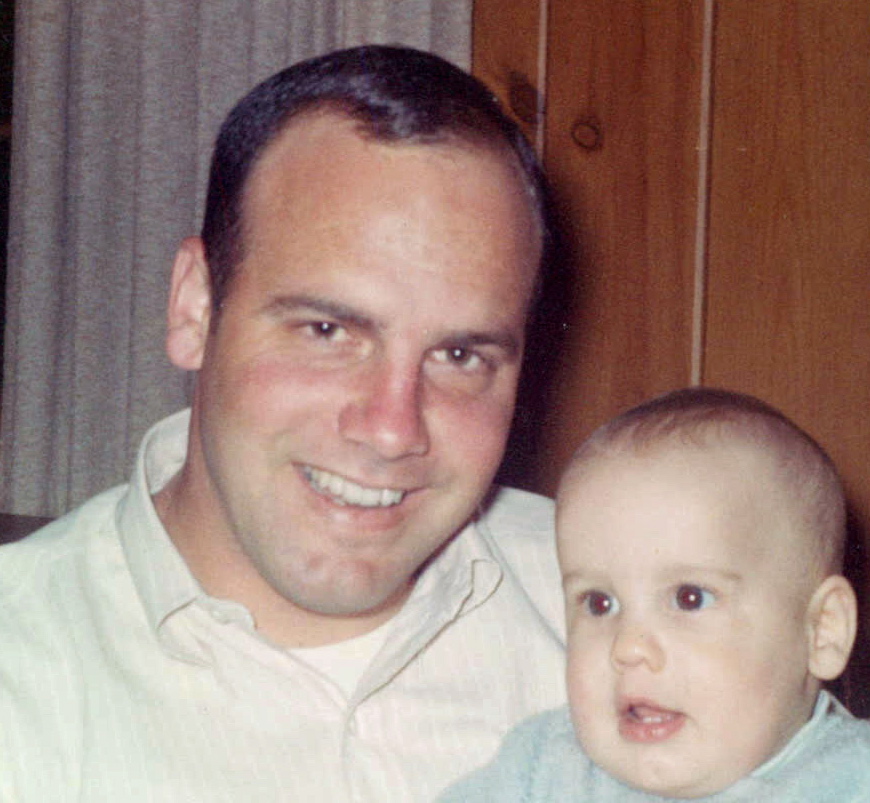
I’ve told friends I plan to blog about our short-term move to Costa Rica – our rationale for the trip, our expectations, our experiences, etc.  However, for my first blog post ever (on Father’s Day) I would like to share a few thoughts about fatherhood and my Dad.

As I sit to write this, I am less than two months shy of my 45th birthday.  I am a husband and a father and have lived outside of my parent’s roof for 23 years.  Even so, I am acutely aware of how much I still need and want a relationship with my parents.  In honor of Father’s Day, I’d like to share a few thoughts on how I’d like to imitate and duplicate what I’ve seen in my Dad.

How I treat my wife.  As long as I’ve known my Dad, I’ve never heard him swear at my mom or call my mom a name.  Ever.  I’ve tried to adopt this and in my 14th year of marriage, so far so good.  I hope this one simple thing becomes a standard my four daughters expect in the way their future husbands treat them.

How I help my kids set high expectations.  Growing up, college was always treated as a given.  I distinctly remember my father discussing graduate school often when I was growing up.  Never in a harsh, “you better do this” kind of way – always woven into the conversation in a non-threatening, “this is just the next step after college” kind of way.  I do this often with my girls today.  I hope they dream big and aspire to reach their God-given potential.

Living the lesson.  Honesty and hard work were huge values of my Dad.  In parenting there is the expression “more is caught than taught” and I believe this is largely how I learned these two values – by watching my Dad every day and in all situations.  In fact, I still see these values at work today in everything he does.  With my daughters, I am constantly evaluating what they see me do, what I say, the expressions I make, the intonation in my voice, etc.  I know they are watching, listening and absorbing and it will influence how they live.

Andy Stanley (www.yourmove.is), one of my favorite authors and speakers, talks about how as our kids grow older we lose the position of power we had over them.  When kids are young, we have a physical advantage and as they grow up through high school and college we hold positional power as we control the resources.  However, physical and position power eventually fade away and if we haven’t led our kids through example and via influence, we will never have the kind of relationship with them that each of us wants in our heart and soul.

While I know I could never do Andy Stanley justice with a paraphrase, his message has stuck with me over the years as I find myself consistently wanting to spend time with my Dad for no other reason than I love him, I enjoy being with him and I want to continue learning from him.  I no longer need his day-to-day approval or money, but I still desperately want to make him proud and gain his respect.  Our respective geographies are currently preventing a live Father’s Day celebration this year.  But I am with him in spirit.  I love you Dad.  Happy Father’s Day!

04 march image0000009A Nov image0000003A DSC_1091