Costa Rica, Family, Fatherhood, Leadership, Parenting, Simplicity

Our personal experiment in “simplicity”

We have spent the last six months on a personal experiment in “simplicity.”  For us this meant “simplicity” from our accumulated stuff, consumerism (i.e., buying more stuff) and our typically busy schedules.  Not trying to suggest we led a monk’s existence while we were here in Costa Rica – we took some awesome beach trips and visited many parts of the country, but below are the intentional things we did as a family in pursuit of “simplicity”.

  • We moved here with two duffle bags per person, each weighing <40 lbs.  Each person’s bags included their clothes, electronics, books, personal items, etc.  This was to last each of us six months and needless to say, we left a ton of stuff at home.  And each of us has not only realized we don’t miss most of what we left behind, we can’t remember most of it.
  • We decided to drastically minimize new purchases that were even close to a “want” vs. a “need.”  We ended up repairing (e.g., shoes and pants) vs. replacing in many cases.  Our daughters were aware of this decision, and amazingly were able to all but eliminate “I want …” from their vocabulary during our time here.
  • We rented a relatively small furnished home.  I’ve spent less than five minutes fixing anything in this house since we arrived six months ago.  With relatively limited cabinet/fridge/freezer space, we simply don’t have the room to buy lots of food and therefore have thrown away almost no spoiled food.  At home in the US, we have so much more cabinet/fridge/freezer space than we really need and we always seem to fill it up.
  • Our girls’ sporting activities were limited to those at school, and when the bus dropped them off they were home for the night.  In contrast, my wife and I are basically chauffeurs for our girls and their activities every weeknight in the US.  Here, we have eaten dinner together as a family almost every night.
  • My wife and I shared one car.  This has been tough, although it is still a pretty blessed position by world standards where the overwhelming majority of people do not have even one car.  Regardless, there were things we simply said “no” to as one or the other had the car, we walked to the grocery store if need be, and in general, we just made it work.
  • Perhaps most important, we’ve had meaningful conversations with our girls throughout the last six months about simplicity and the options it affords you in life.

Without real intentionality, planning and family communication, I don’t think these things would have happened.  For us, temporarily moving abroad enhanced our ability to make this experiment a go as we started with a “clean slate.”  [For some awesome and inspiring examples of proactively living “simplicity” in everyday life, I highly suggest reading More or Less by Jeff Shinabarger.]

There is an inertia effect in our lives that seems to demand more “stuff” and more commitments and it is so hard to overcome.  I am hopeful that having “lived” the lessons in this experiment that we will be able to remember them when inertia once again begins to take hold at some point in the future.  And it’s my hope there are other aspects of simplicity we can bake into our DNA.  As Richard Foster describes so eloquently in his book “Celebration of Discipline” – “If what we have, we  (1) view as a gift vs. earned by our own merit, (2) it is to be cared for by God – I.e., we don’t get all hung up or anxious over losing it, and (3) it is available to others – then we will possess freedom from anxiety.”  And not be owned by our “stuff.”  That would be a pretty great place to be.

I believe our “simplicity” exercise will have a meaningful long-term effect on my family.  Not every day necessarily, but hopefully at some point when it really counts.

How are you simplifying your life?

Facebook, Family, Fatherhood, Friendship, Parenting, Social Media

The caricature trap of Facebook

imagesThe caricature trap of Facebook – as in a greatly exaggerated version of real life, that often imparts the wrong take-aways.

Facebook is an awesome tool for connecting and I am a fan.  However, I have lately been confronted by two dynamics that are just wrong.  They are wrong for adults and they are wrong for my oldest daughter who just turned thirteen and recently set up a Facebook account.

Don’t compare your real life to someone else’s Facebook life.  Looking at my page or my wife’s page one might assume our life is all sun, beaches and margaritas.  We receive comments from people all the time about “living in paradise every day.”  In reality, we live minutes away from pretty bad poverty, we struggle with language barriers daily, we struggle through homework with four kids every evening and we usually go to bed exhausted.  There are ups and downs like everyone else.

Facebook only shows a few snapshots of an otherwise long movie and most of us (myself included) tend to show nice pictures from nice experiences.  In a similar fashion ESPN highlights show perhaps 5 plays out of ~130 from a typical football game.  They don’t show the plays that produced no tangible results yet took the same effort and energy.

I love this quote from Jim Collins – “Comparison is the cardinal sin of modern life.  It traps us in a game we can’t win.  Once we define ourselves in terms of others, we lose the freedom to shape our own lives.”  How much more is this true when we are comparing apples (our real life) to oranges (someone else’s Facebook life)?  And with 10% of Facebook accounts believed to be fake, the comparisons can be even more outrageous.

Don’t seek worth or approval from “comments” and/or “likes”.  A day after my daughter put up pictures on her new Facebook account she was a bit miffed that neither my wife nor I had “liked” her pictures.  She actually felt unappreciated because we had not “liked” her pictures.  I suspect this one instance is a microcosm of what happens with lots of people – I.e., feeling upset, disrespected or unappreciated because of not receiving “likes” or “comments” after posting a message or picture.

“Unexpressed gratitude expresses ingratitude” (from Andy Stanley) exists in real life.  If my wife continually goes out of her way to do something nice for our family (she always does) and no one ever takes the time to recognize it, her likely inference would be that no one really cares. Somehow this dynamic gets incorrectly applied in the online world where the lack of a “comment” or “like” is viewed as a personal affront.   This situation reminds me of a funny line (“people like-button me, they really like-button me!”) in a very funny song some friends wrote and performed – So Many Friends (That I Broke Facebook.)

My counsel to my thirteen year old (and to myself at times) is to not be so fragile in spirit or desperate for an approval that really doesn’t matter or have any bearing on your self-worth.

At the end of the day, Facebook (or any other social media platform) can be a great tool.  Beyond simply staying connected, it highlights the above lessons (and many others) and can lead to some great parent-child conversations in your household.  What lessons have you gleaned from Facebook and how have you applied them in your life?

[By the way, some “nice” new pictures are in the picture gallery]

Faith, Family, Fatherhood, God, Parenting

Don’t make me come down there! (and other lessons God might be teaching us through parenting)

Me and my little girls

Me and my little girls

The statement “there is no better or harsher corrective to one’s thinking about human transformation and development than one’s children” is so true at times.  As we wind our way through parenting our children, it is easy to envision God looking down at us, the parents, and shaking his head at the irony of how often we miss the lessons we attempt to teach.  I assumed I might find a book or a series of articles on this topic, but could not, so I thought I’d share a few I’ve collected over time.  Where I can recall a direct source for the metaphor it is attributed.

If you believe in God you might identify with some of this content.  Even if you are unresolved spiritually or don’t believe in God, but are a parent you might identify with some of this content.  For me personally, many of the below examples hit closer to home than I would like.

Situation: You are driving in the car and your children are arguing in the backseat about something that is completely trivial.  You respond with something along the lines of “Don’t make me stop this car and come back there.”  Lesson: How often must God look down at us arguing over denomination issues, biblical interpretation issues, inter-family issues, etc. – where we are certain it is more critical to be right than to simply show love to each other – and think, “Don’t make me come down there.”  Metaphor from a Craig Groeschel message.

Situation: Two of your young children are fighting over who gets to cuddle with you (or run an errand, do something fun, etc.).  Before you want to do the fun thing with either of them you want them to reconcile with each other, and if they are not willing, you don’t really want to give either of them any special time.  Lesson: How often do we go to God with prayer, concerns, questions, etc. when we have unresolved conflict in our life?  How often must God look upon us and think first apologize to those you have wronged and then come to me?  Metaphor from a Craig Groeschel message.

Situation: You have bought your child something to eat – candy, popcorn, whatever.  You innocently reach over to grab a bite or a handful and your gesture is met with groans or screams.  Your first instinct is to say “I gave it to you and you can’t share just a little?”  Lesson:  My first instinct is way too often that what is mine is really mine.  It is easy to envision God shaking his head thinking “I gave it to you and you can’t share just a little bit???”  Metaphor from a Kevin Myers message.

Situation:  Think back on the birth of your first child.  Remember looking down at that little girl you just saw for the first time and thinking you would lay down your life for her, that you loved her more than you could describe, etc.  And the truth is that she had done nothing to be deserving of your love and affection.  Lesson: It is easy to forget that God loves each of us to an even greater degree than we can comprehend; despite the fact that we have done nothing to deserve it and way too often actively rebel against it.

Situation: You witness your child do something nice or selfless for someone else.  Your heart gets filled in an amazing way and you find yourself wanting to lift up your child in some positive way.  Lesson:  God lifts up those that lift up others.  Every day I am confronted with many situations where my simple response can lift someone up or bring them down, bring more love into the world or more anger, etc.  I get so proud when I see my kids make the obvious choice – it’s too bad that in a hurry or frustration or whatever other emotion, that I too often make the wrong choice.

Situation:  Your child wants an additional privilege or responsibility and one of the first thoughts through your head is “you haven’t even done a good job with the other stuff you are responsible for, why would I give you more?”  And that once they have proved themselves, you’ll consider their new request.  Lesson:  How often do we want to expand our earnings, our influence, etc. when we have failed to truly be a good steward of our present situation?  It is easy to see God looking down in frustration saying, “please take care of this first and then we can consider something new.”

Situation: You are observing your young child trying to do something difficult – e.g., assembling a new toy.  He or she gets frustrated but continues on without asking for help and their frustration grows along the way.  You think, “I am right here, you just have to ask for my help.”  Lesson:  How often must God see us struggling, living in frustration, and think “I am right here – why don’t you ask me for help?”  Metaphor from a Ken Coleman podcast.

The above sampling is just scratching the surface of real life examples that are easy to see with a bit of reflection – I can only imagine how deep this list will be for me once I’ve survived the teenage years with my kids.  I’d encourage you to look for similar metaphors in your life that you can see in your parent/child relationship.  Sometimes the pause for reflection can lead to real life change.

So, what lessons do you find yourself trying to teach your kids, that perhaps God would say you might need to listen to as well?

Costa Rica, Family, Leadership, Learning a second language, Learning Spanish

What’s the return rate on an “experience?”

images copyIn a recent national poll with two choices – keep your current debt level or gain 25 pounds and have your debt erased, 72% of Americans said they’d rather keep the debt than put on the pounds.  A fascinating statistic considering the average household’s debt is 112% of disposable income.  So for most of us, vanity trumps financial peace of mind.  What other financial trade-offs might we be willing to make?

Here is one for consideration.  What percentage of your current savings would you give up to spend a one-year sabbatical, family experience abroad complete with rich learnings?  This question hits close to home for me as we are trying to capture the following things on our experience abroad.

For some context to answer this question here is some food for thought.

A one-year excursion to a foreign country is very expensive.  Without real intentionality and financial planning, it will never happen.  And all the advanced planning and budgeting still doesn’t ease the pain of seeing investment dollars (and Colones) go through the drain (especially while the faucet is temporarily shut off).  There are the cash costs such as school, rent, a car, monthly expenses abroad, monthly expenses back home, etc.  Add on top of this new foregone savings (you don’t really give up salary on a sabbatical, only the savings/investment that would have resulted from that salary).

Assessing the value of an abroad experience is very difficult. It’s kind of an expense and it’s kind of an investment, but not exactly either.  Keep in mind that there will be storms along the way, so your notion of the “experience value” will likely shift throughout the experience and well after.  And the value placed on a particular experience will vary by as many people as you ask, so perhaps consider the questions below:

  • What would be the value to you in reclaiming a year with your oldest kids?
  • How about the value of your family knowing a second language and culture?
  • How about the value of personal reflection time vs. a never-ending to-do list?
  • How about the value of pursuing and mastering a long-desired hobby?
  • How about completing all of the above things at the same time?
  • Are you ready to weather the storms that come during the experience?

In our current situation, the immediate costs are much easier to determine than the collective long-term benefits, which makes the process a struggle at times.  Regardless, this was our dream and our gut feel is that it will pay off in many multiples over time, and likely even in some unexpected ways.

Amazing Things, Family, Friendship, Nicaragua

Still Amazed

I recently sat on a balcony in Nicaragua for 30 minutes just watching the skyline and the falling sun in this picture. I’ve seen thousands of sunsets and they never cease to amaze me. Even when I know something will happen, should happen or could happen, I still find myself amazed when it does happen.

The dictionary defines “amaze” as follows: to overwhelm with surprise or sudden wonder; astonish greatly; something unexpectedly wonderful. Even Jesus, an all-knowing savior, was amazed at something he knew would or could happen [albeit only twice; in Luke 7:9 he was amazed at the centurion’s demonstration of faith and in Mark 6:6 he was amazed at a lack of faith in his hometown of Nazareth].

Focus on amazing things – they are all around you and they can overcome the negative nuance of the day.

As a kid it is easy to marvel or wonder at lots of new things and as we get older our sense of wonderment at new things or experiences tends to fade. Each day, it is so easy to let my mind dwell on the negative things around me, instead of centering it on amazing experiences that enrich it, be they large or small. My current outlook and even my whole day can quickly turn positive when I look for and focus on amazing things all around me, such as:

  • Watching a beautiful sunrise or sunset. There is something lifting to the soul to quietly watch this happen.
  • Seeing my kids do something completely selfless, demonstrate great sportsmanship, etc. We expect these outcomes at least some of the time, but even so, when it happens it is magic.
  • Witnessing someone simply do the right thing – return incorrect change, stop and help someone with car trouble, etc.
  • Hearing a sermon or a verse in a song, or reading a passage in a book that seems to be crafted just for me and what I need to hear or read at that time.
  • My four girls running to give me hugs and kisses before catching the school bus in the morning warms my heart and provides lots of perspective on other issues.

How are you amazing someone right now?

As mentioned above, Jesus was only amazed twice in the New Testament; yet he continuously amazed everyone by what he said and what he did.  I heard a message from Craig Groeschel once where he asked a simple question that has weighed on my mind since – “When was the last time people were amazed at your boldness (for the Kingdom)?”

The above question can be applied in some other similar contexts.  What actions, big or small, could I be taking each day in my own life to amaze someone and give them something positive to focus on in their life?  How could I amaze someone in a way that inspires him or her to take action? Or get out of a rut? Or take an uncomfortable step in a new, but needed, direction?

Whats amazing in your life that you should focus on when negative thoughts and feelings creep in?  What could you be doing now to amaze others in a life affirming and uplifting way?

See more pics from our recent trip to Nicaragua in the picture gallery

Costa Rica, Family, Friendship, Simplicity

Turns out there are not many “things” that we really miss …

Our point of departure (Atlanta):  Spacious home, pool, abundance of clothes and stuff and lots of busyness in our lives.  Our point of arrival (Costa Rica for a year):  Much smaller home, very few clothes, personal items and personal commitments (at least initially).  For a bit more perspective, each member of my family brought two suitcases (< 40 lbs. each) with all their clothes, personal items, books, electronics, etc. – with four daughters in my house this deal wasn’t an easy sell.  On top of that we decided not to buy any new or replacement items while we are here.

We are now a few months into our adventure and have inevitably discussed things we don’t really miss, kind of miss or definitely miss.

Dont really miss

  • Clothes.  I brought enough clothes to fill 17” of hanging closet space and a handful of drawers.  While I occasionally think, “I wish I had brought xyz”, there is a peace in the simplicity of not having that many choices in the morning.  It was also very therapeutic while packing to give the majority of my stuff away, leave some in Atlanta and take a little bit down here.
  • Our home.  We built our home and we love it, but are doing just fine in a smaller, furnished rental. I haven’t spent a minute fixing anything and due to size I am able to locate any family member within about ten seconds.
  • All of our stuff.  I believe we are pretty good at giving stuff away if we no longer use it frequently, however, like most families we tend to be net accumulators over time.
  • TV.  Aside from some CNN and the occasional cable show, I don’t watch much TV here.  I don’t miss the nightly news that is so full of murders, arrests, etc.  A caveat – I will likely revisit this particular bullet when football season begins.
  • The overall busyness of our lives.

Miss, but could get used to doing without

  • Knowing where things are.  Stores, restaurants, doctors, etc.  There is a sense of peace from being knowledgeable about your surroundings.  Probably not too long before I will be able to say this about my new home.
  • How I feel every time I drive into my neighborhood.  It is beautiful & peaceful.
  • Brightness after 6:00.  The sunset in Costa Rica varies from about 5:15 to 6:00 over the course of the entire year.  I find myself exhausted at what I think must be 10:00 only to find it is only 8:00.
  • Street lights.  There are very few here and it is pretty dark at night.
  • Street names/numbers.  There are very few named streets and most directions involve landmark locations.  That said, I was introduced to the best GPS tool I’ve used called Waze (http://www.waze.com) that has made things easier.

Truly Miss

  • Our family.  We miss each of them dearly.
  • 12Stone Church (http://www.12stone.com).  We are participating in the on-line services and are getting involved in a great local church here, but a live 12Stone campus is still home.
  • Our dogs, who we were not able to bring with us.  We were blessed to have our dog trainers (Dawn & Karisha) graciously offer to take care of them.
  • Close friends – i.e., those people with whom we regularly do life.
  • Casual friends – i.e., friends we don’t get together with that often but when we do we always have fun and leave encouraged.
  • My business partners and old friends at 4th Strand.

Before leaving Atlanta I had a conversation with some of my best friends about how difficult a permanent move would be at this point in life with everything we have to be thankful for.  I hope that upon our return this is all the more evident and we find ourselves bursting with an appreciation that doesn’t fade over time.  Not for any of the “things” in our life as it turns out the only real “things” we miss are the important people and communities to which we belong.

Andy Stanley has said, “you will never know your most impactful leadership moments until well after the fact, and maybe not ever.”  I am very fortunate to be surrounded by great people who speak into my life continuously, even if they aren’t aware of this fact.  These people and the daily lessons I receive from them are the “things” I truly miss.

What are the “things” you could live without in order to reflect on the “things” you value most?  Or rather, what are the “things” in your life that might be clouding what you should value more?

Costa Rica, Family, Fatherhood, Parenting

Unable to outsource my family!!!

photo copyAlmost every year at the end of the school year, as kids’ school activities dominate my wife’s calendar, I remember hearing her say “I can’t wait for school to be over!” It seemed we were only a week or two into summers when I remember her saying “I can’t wait until school starts!”

When routines are changed and much more time is spent together, annoying behaviors and characteristics tend to become amplified.  This got me thinking about all of the ways we outsource our children, families, relationships, etc. – oftentimes to compensate for certain behaviors or to simply avoid them.  While there are corresponding positives of each of the following bullets, here are some ways we (i.e., the McNeills) outsource our kids and ourselves:

  • Our girls’ sports occupy a lot of their time.  No doubt they learn great lessons, make friends, have fun, etc.  Sometimes we find ourselves hoping it will simply serve to burn off energy so they will go to bed early.
  • Our girls have a lot of play dates at home or at their friends’ homes.  When they are engaged with friends, they tend to be more out of our hair.
  • Our girls zone out with technology. For them, this means watching YouTube videos, making Video Star videos or posting pics on Instagram.
  • Our girls each have their own room at home and can disappear from the rest of the family whenever they want.
  • We get together with other couples that also have kids. All the kids play together and the couples hang out, or the men talk while the ladies talk. Even though we are together, we are often really apart as the same time.
  • My wife and I both have our own personal outlets (e.g., tennis, working out, etc.) where we are on our own and away from our family.

Our outsourcing recently came to an end as we’ve literally spent the whole summer together. We have eaten every meal together and shopped most grocery runs as a family.  When we’ve done pretty much anything we’ve done it together.  With the exception of a bit of technology, all of the above bullets have been absent from our lives this summer. It’s been interesting, eye-opening, frustrating, great, annoying, etc. – often all at the same time.  Here is what we are learning and experiencing:

  • Certain character traits (of myself, my wife and all four daughters) that were perhaps in the shadows but managed via outsourcing are now front and center, and we have no choice but to address them.
      • We’ve talked a lot around the table about how these behaviors detract from the family.  Eating breakfast, lunch and dinner together is a great platform for family discussions.  We’ve lingered at the end of meals and just talked and laughed.  It might have only been possible because none of us had anywhere else to go, but that doesn’t really matter. The moments and associated lessons still occurred.
      • We are making each girl room with each sister for four months during our twelve-month stay.  It was awesome when the two girls with the most combative relationship huddled together to make a list of rules they’d try to live by in order to get along better while rooming.
  • Having individual outlets is really important for our family. For my wife and I, it helps build an appreciation for other family members when we are without them. It makes us miss our girls more.  When we get to engage in personal pursuits that we enjoy, we are more inclined to proactively help them do things they want to do.  After a summer without any individual outlets, we are very ready to reintroduce some into our lives.
  • We learn a lot from socializing with other families.   We’ve got some great friends at home that are great role models as spouses and parents.  We pick up insights all the time that we try to apply in our own lives.  It is more difficult now that we are largely winging it on our own, but luckily we are starting to meet some new friends that can hopefully help fill this void.
  • All of us are a bit more selfish than we should be.  A few years ago, Kevin Myers mentioned, “The magic of family is in sacrifice.  Are you silently sacrificing or silently selfish?” A few small instances of sacrifice go such a long way that it amazes me that continual sacrifice is not intrinsically built into my DNA and that I have to constantly remind myself to do this.

Sometimes when your circumstances change, the silent sacrifice or silent selfishness becomes a loud boom that everyone can hear.  Perhaps a large reset is good for all of us to experience every now and then to bring things to the surface and allow for real reflection and addressing.

Costa Rica, Family, Learning a second language, Learning Spanish

Learning Spanish is like being in a coma…

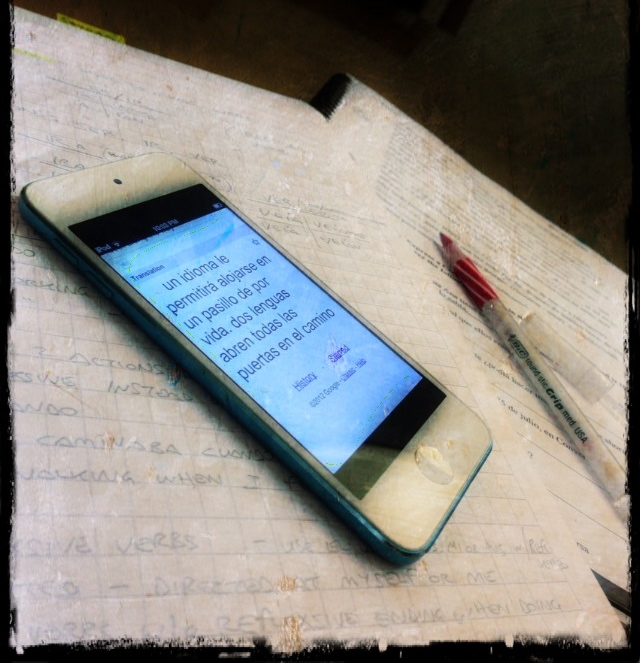
IMG_2350… I’ve read that many people who have woken up from comas claim they could hear and understand the things being said around them, but simply couldn’t respond vocally or physically.  This is crudely similar to my Spanish abilities after one month of immersion school at Conversa.  I comprehend much of what I hear – I just find it impossible to speak the language most of the time.

My Spanish abilities hierarchy is as follows: (1) When reading I comprehend Spanish pretty well.  (2) When listening (and if spoken slowly) I can understand it fair to good.  (3) However, forming a childlike sentence and saying it with confidence can be incredibly difficult and frustrating.  I am equally frustrated to learn just how much English grammar I have forgotten – does anyone over 40 not presently employed as an English teacher remember exactly what are indirect objects, past participles, future perfect tenses, etc.?

In short, learning a new language is very difficult.  And, I am blessed to have the means (i.e., the time off and the money to afford) for immersion school.  I have a newfound empathy for people in the US who cannot speak English and will certainly have an altered perspective the next time I hear someone utter “Speak the language (i.e., English) or leave the country.”  For most people trying to learn a second language in even the best of circumstances, it simply isn’t that easy.

So, how much of a new language can one really master in one year?  In one of my favorite books, “Outliers”, Malcolm Gladwell (http://www.gladwell.com) discusses the need to invest 10,000 hours in a trade or activity to reach expert status. I’m currently investing in six weeks of immersion school at seven hours a day for five days each week. This equates to 210 hours of Spanish or roughly 2% of the necessary time needed to reach expert status.  Barely a dent.  In the 354 days I have remaining in Costa Rica, I would need to invest:

  • 27 hours per day to reach 10,000 hours (i.e., Expert) – not possible
  • 14 hours per day to reach 5,000 hours (i.e., Fluent?) – not likely
  • 6.5 hours per day to reach 2,500 hours (i.e., ?) – possible with real dedication

In short, truly learning a second language while living your life in your primary language seems impossible to me.  We are fortunate to be learning Spanish while living in a Spanish-speaking community and we are trying to break the pattern of speaking English while in our home, but old habits die hard.

I’m hopeful the immersion classes truly kick-start the speaking process for my whole family (by the way, I highly recommend http://www.conversa.com).  We debated spending the summer relaxing and getting settled and then trying to begin the language process – vs. spending seven+ hours a day with our brains in overdrive.  But we were reminded of something said by our friend (and pastor) Kevin Myers about training endurance vs. trial endurance – “If you don’t endure the training, you will be forced to endure the trials.”  This statement is true and applicable far beyond language training to personal finance, relationships, etc.  Regardless, we opted to endure the training to minimize the longer-term trials.

Recently, I’ve come across many Costa Ricans who have been patient and understanding as I fumbled for simple words.  I felt foolish and frustrated but their kind expressions and encouragement were a real shot in the arm.  In contrast, I’ve come across other people who were clearly frustrated by my lack of Spanish and I suspect we both left the interaction a bit worse than we entered it.

So … the next time you come across someone who is struggling with English, please be patient and be an encourager.  Remember, what they are trying to do is really hard.

How was your experience learning a second language?  Any tips?

Costa Rica, Family, Leadership

“Spending your time isn’t just a metaphor”

river rock 2One of our goals for this year was to reclaim some family time while in Costa Rica.  As of today we have been here for one month and almost 10% of our trip is now in the rearview mirror.  We have lots left that we’d like to accomplish but without real intentionality, plans and dreams tend to drop by the wayside and are long forgotten.  Sometimes a visual reminder can be helpful.

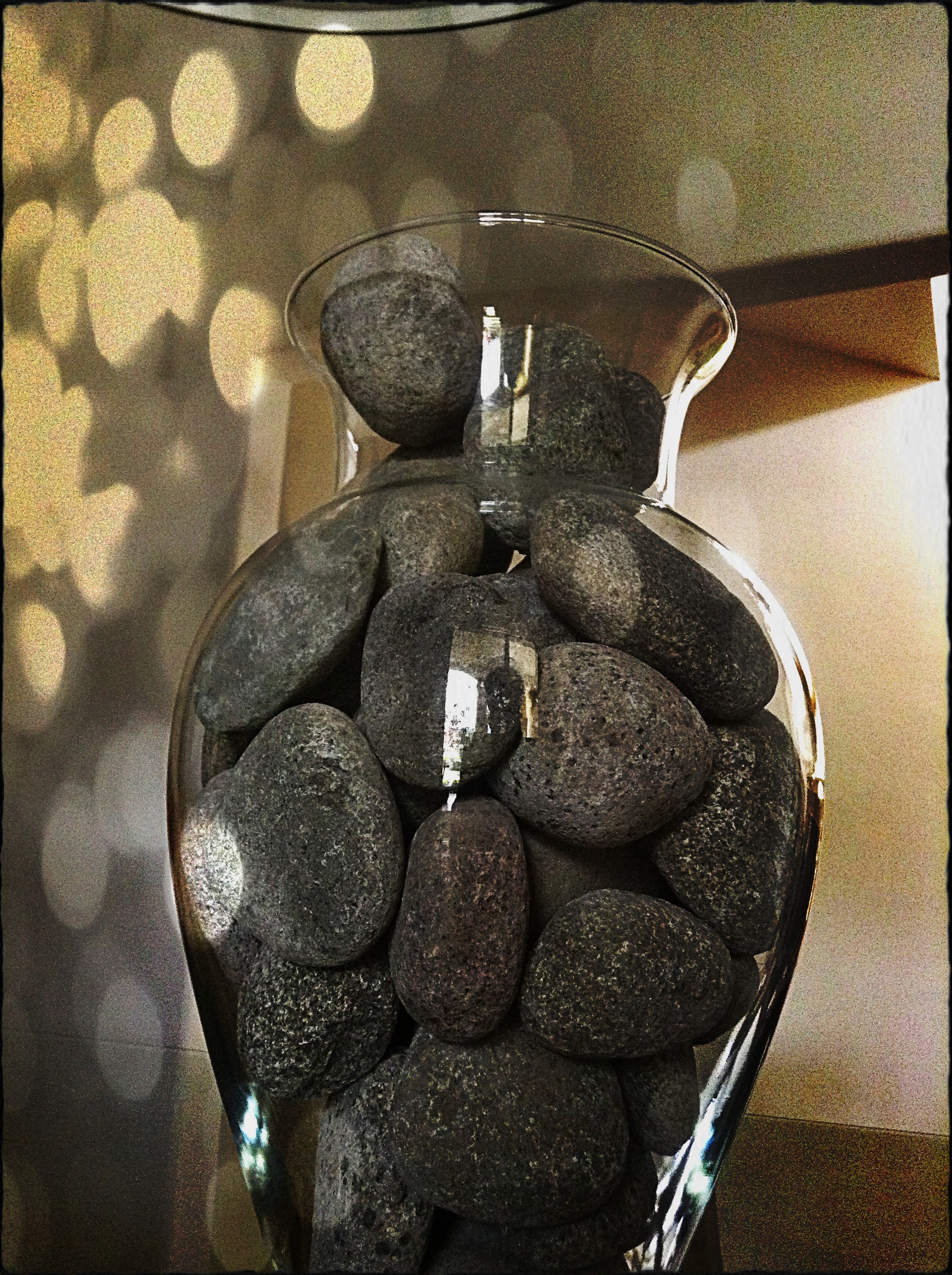
Pictured is a vase with 51 stones that sits on our dining room table – it represents the number of weeks we have left in Costa Rica before we return to Atlanta. Each week as a family we pull out one stone and throw it away.  This gives us a chance to discuss the things we still hope to accomplish while we are here and use the stones as a visual reminder of how little time we have left in this place.

This illustration wasn’t my idea (I heard a similar example on a John Maxwell podcast and have seen it elsewhere since). In the same podcast, Dr. Maxwell said a great and thought-provoking expression – “Spending your time isn’t just a metaphor.”  This expression can be brought to light in many different ways.  E.g.,

  • Based on actuarial tables and my personal health I have 43 years left to live (www.deathclock.com – a bit morbid I know but perspective setting nonetheless). We have ~12 months left in Costa Rica and therefore almost 2½% of my remaining life will be spent here. At the end of the day, how I spend my time here matters, as it is a meaningful percent of my remaining time on earth.
  • My wife and I theoretically have 317 Saturdays with our oldest daughter Hailey before she leaves for college (theoretical because I know teenage years will deplete the actual number of Saturdays we get with her).  In years past the extra hours I worked at night and on weekends over the course of a year or two probably exceeded the amount of time in my daughter’s remaining Saturdays at home.  It’s so easy to convince one’s self the extra hours at work are so critical, but six years from now where will I be happier to have invested my time?
  • Or to paraphrase the example from Dr. Maxwell’s podcast, if someone my age decides to really kill themselves at work for the next five years in order to afford a second home, that equates to ~12.5% of their remaining life. A true cost indeed.

Steve Farrar wrote a phenomenal book called “Point Man” that has one of my favorite quotes regarding family/relationships/parenting, “Quality time comes at the most unusual moments.  You never know when it will happen.  It usually makes an appearance someplace in the realm of quantity time.”  While we have always tried to be intentional about family time, we now have a unique chance to take advantage of some serious “quantity time” and to fill it with meaningful experiences that we can discuss and laugh about together for many, many years.  If we are really successful leveraging our time in Costa Rica, our meaningful experiences will accrue commensurate with the depleting of the stones and we won’t find ourselves one day staring at the empty jar wondering where the time went.

river rock 1

  • Is the return on how you are currently spending your time worth the investment?
  • Could added focus/intentionality make a difference in the quality and quantity of stories youll be able to tell one day?
  • Where and how might a visual reminder prove meaningful for you?

51wKwkRNU5L._BO2,204,203,200_PIsitb-sticker-arrow-click,TopRight,35,-76_AA300_SH20_OU01_ logo

Costa Rica, Family, Journaling

“I’ll talk about this at her rehearsal dinner” … with some help from my journal

JournalFor the last several days I’ve been telling myself I really need to journal all of the things that have been happening in our lives.  It’s so easy for me to let “life” take over and ignore the urge to write things down, but each time I read my journal I am so thankful the younger me took the time.

Why I started journaling:  I began journaling in 2008 although I had considered doing so well before then and on many different occasions.  Two occurrences convinced me it was finally time. First, I utterly forgot something I was sure I would never forget, that I had boldly claimed “I’ll talk about this at her rehearsal dinner”.  And yet I forgot until I was reminded years later when the critical details had faded.  God knows what needless information had taken the place of this precious memory over the years.  Second, I saw the real value a mentor and friend of mine (Corey Baker) got from his journal.

What I journal:  I suspect a journal is as individual of a thing as one’s own thoughts.  For me, I write down inspiring or funny quotes I want to remember, thoughts about each member of my family, fun experiences, personal goals, scripture I’m contemplating, etc.  Lately I’ve been using a Journal App (myMemoir) but I’m not convinced I won’t go back to a hand-written journal.

How I benefit from journaling:  I frequently read my journal and I’m reminded of sights, sounds, emotions, etc. that I know would have faded from memory if not for my journal. Doing so helps me refocus intentionality on the most important things in my life.  For example, many years ago I completed an exercise called Tribute Statements (also at the advice of my friend Corey Baker) – below is an excerpt from that exercise that I journaled regarding what I would hope to hear my four girls say at my 80th birthday party.  This is one of my most personal and important journal entries.

  • “My dad never gave up on me when I strayed or fell or didn’t believe in myself.”
  • “My dad always encouraged me and emphasized my positives.”
  • “My dad showed me and told me every day how much he loved me.”
  • “My dad cherished my mom every single day.”
  • “My dad was the spiritual leader of our family.”
  • “My dad set the bar high for the type of man I married and raised a family with.”
  • “My dad always stood up for the innocent and weak.”

I ended the above list with the entry “I need to make sure my thoughts, expressions, words and actions are always aligned with accomplishing the above outcome.”   Or to quote Stephen Covey, “Begin with the End in Mind.”  I’ll confess it’s hard for me not to get a bit emotional when reading and thinking about this list, however, every time I do so I give myself a mental score on how I’m doing and think of ways to be a better father.

Reflections on what I have written over the last five years helped drive our decision to spend a year in Costa Rica and how we will utilize our time.  I suspect events and feelings that lead to journal entries over the course of the next year will help influence where I land next professionally and also have great impact on my personal life.

I encourage you to pick up a pen (or a keyboard) and start journaling about those things most important to you … that you are just sure you will never forget.